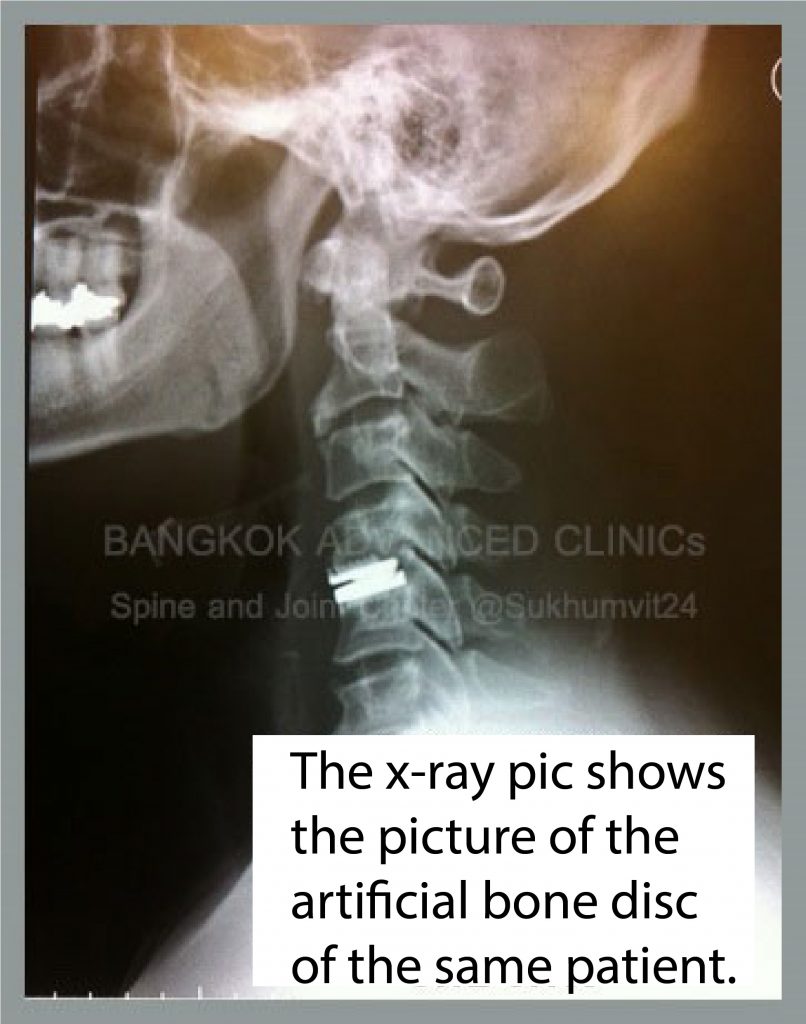
Every time we move, our muscles contract and release, pulling our bones, enabling us to move. While undertaking low movement activities such as working in front of the computer or driving long distances, the muscles around the neck become inflamed. Pain accumulates little by little without any awareness of the individual. When we do finally feel the pain, it can be a chronic pain at the nape and the shoulder blade. It can feel like the sprain of the neck similar to that felt after slipping off the pillow or sleeping in an uncomfortable position, limiting neck movement and preventing turning of the neck all the way. Some turn to massages for relief. The massage will squeeze and unwind the muscles and it will feel like the sunken, stiffened shoulders are relieved. However, a massage is only a temporary relief. If the condition has been neglected for a long time and not corrected at the cause, the pain will be far more severe and can progress to the failure of the neck muscles. At this stage the patient cannot straighten his neck even for one minute. The pain will be so intense that the patient is unable to manage the pain. Some will suffer headaches, pain in the eye sockets, and suffer from nausea and migraines. Finally, patients can suffer shooting pains down the arms and legs and experience numbness in the hands.
Many will attempt to medicate against the symptoms but will find they cannot get rid of the condition and pain. Additionally, long term usage of painkillers and anti-inflammatory medicines can have some severe side-effects including stomach ulcers and kidney diseases.
There are 3 stages of neck muscle failure:
1. The symptoms are limited to the muscular inflammation. Pain in the shoulder blades, preventing prolonged activities such as working in front of the computer. At this initial stage, the patient will be constantly massaging, forcing and bending the neck. This is just a time-buying activity and it will only temporarily relieve the pain and not offer any cure.
2. Bone degenerative stage. After struggling with pain for years, x-rays will show there is calcium on the joints of the neck bone. Calcium attached to the bone is a sign of overuse of the joints. The bone joint is overburdened with the weight due to the weakness of the muscles. As the joint is constantly working in the place of the muscle, over time the calcium will accumulate in greater quantities. Eventually the joint will not move freely and the neck will tilt to one side.
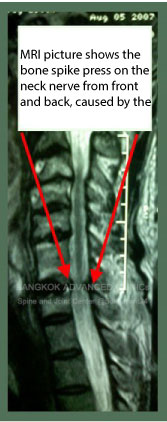
3. The neck nerve is pressed. When the space of the neck nerve canal is restricted by the calcium accumulation, the blood circulation required to nourish the nerves is reduced. The patient will start to feel splitting pain down through the arms, numbness of legs and in the hands. The pain at the arms will be much more intense than that at the neck. Often the patient will feel as though the muscle is tearing. As the nerve cells are destroyed, the muscles of the legs, shoulder blades and up to the neck will become emaciated and reduced in size and hands will have reduced or no strength. At this stage an operation is the viable solution.
Today we live in an intensely busy society. People, particularly those of a working age, have no time to take care of their own health. Often, they have no time to exercise, to build up and manage muscle strength. Many mistake the activities of routine work as some kind of viable exercise. To ensure good, lasting health, it is recommended that we exercise, play sports and swim. By not consistently building up strong neck muscles and avoiding activities that prevent no or limited neck movement, we are likely to succumb to the above generative neck muscle condition!
Wishing you good health and no neck pain