Suffering from numbness of the hand or hands can be a worrying symptom. Sufferers can find the fear of permanent damage or loss of feeling to be particularly worrying, understandably.
Carpal Tunnel Syndrome
(Numbness at the tips of the fingers from the narrow Carpal Tunnel)
Nerves in the hands can be compared to the electrical wiring in a house. Like the wiring in a house, where the electricity is supplied from a source to the fittings (light switches, power outlets, etc.), the hands, like arms, legs and rest of the body receive signals from the brain stimulating muscles and skin, enabling movement and allowing us to feel and touch the world around us.

These signals are carried to the hands through tunnels. Along with the nervous signals these tunnels also carry blood. These blood vessels transport the nutrients required to feed these nerve cells and to keep them alive.
These nerve cells are fragile and need to be protected and maintained at all times. At the wrist, the channel through which the blood, nutrients and signals travel is called the Carpal Tunnel. Often various issues can cause the narrowing of the Carpal Tunnel, reducing the blood supply. This narrowing of the Carpal Tunnel causes a reduction in blood supply to the nerve cells. This reduction in blood supply weakens and eventually kills off the nerve cells. As these nerve cells control the feeling in the palms and fingers, a deterioration of the cells can cause such issues as numbness in the fingertips, particularly in the index, middle and little fingers. Early symptoms are often a numbness in the fingertips, this numbness usually sets in after undertaking an activity using the wrist for a prolonged period, for example after a long drive, gripping the steering wheel, typing or holding a phone for an extended period of time.
Some sufferers will feel pain in the palms of their hands that stretch back to the shoulders (known as Retrograde Pain). If left unchecked and untreated, long-term repercussions of Carpal Tunnel Syndrome can cause severe reduction in the day-to-day functionality of the hands, caused by the deterioration of the nerves and the emaciation of the muscles. This leaves sufferers with weak hands and without the strength to hold simple items (categorized as Muscular Atrophy and Weakness).
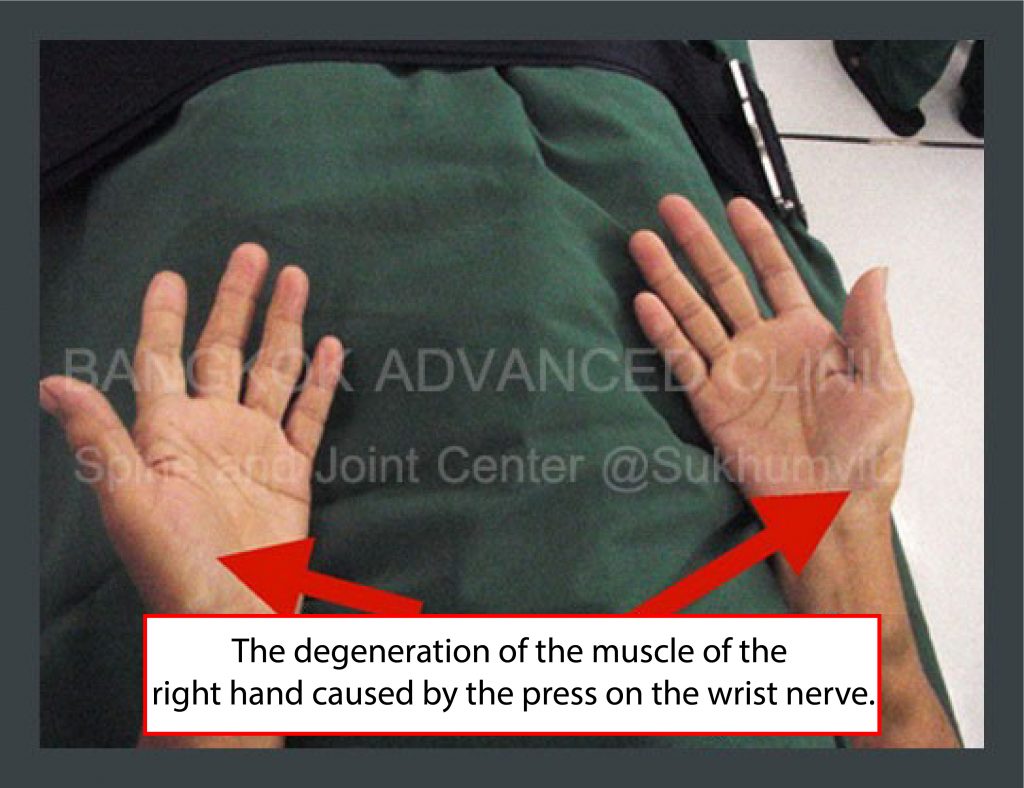
Historically, narrowing of the Carpal Tunnel is more common in middle-aged people due to greater levels of fibrosis formation in the ligaments and tendons of the wrist. This increase in fibrosis further increases tightness and tension in the wrist.
Due to hormonal changes during pregnancy, Carpal Tunnel Syndrome is more severe in pregnant women. These hormonal changes stimulate inflammation of the muscles increasing the likelihood of fibrosis and tightening of the wrist nerve. Patients can help reduce or prevent problems by ensuring that wrists and hands are not kept in a position that is likely to cause or increase nerve inflammation. For example, folding the wrist for too long, resting the chin on the wrist, or other similar constrictive positions.
In some cases patients can take anti-inflammatory medication to reduce and manage nerve inflammation and take Vitamin B supplements to stimulate the nerve and help prevent deterioration. However, if the deterioration and damage is too severe, the only option can be to undergo an operation.
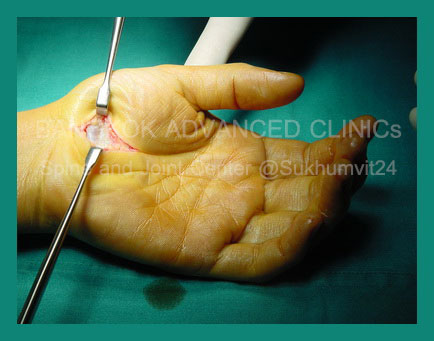
The operation will help to expand the Carpal Tunnel at the wrist. This will enable the increase and quantity of red blood cells reaching the nerve cells. This expansion operation is achieved by opening the Carpal bone that covers the nerve. Currently there are two types of operation. The first is an endoscopic operation. Using an endoscope, physicians cut the ligament from inside the Carpal Tunnel. The second and more common solution involves a surgical incision being made in the palm of the hand. Whilst the incision in the hand will be larger than the endoscopic operation, it is a more effective procedure. The hand of the patient is administered with anesthetic to prevent any pain being felt. After the procedure, patients are free to go home and do not require a prolonged stay in the hospital.
Following the operation, nerves will often return to normal. However, should the cells be too far deteriorated following a prolonged period without treatment, it may not be possible to repair the damage, ever through a surgical procedure, in the same way that if ripe fruits are not picked they will rot on the tree. But if there is an indication that the operation is a viable option then there is good hope that a recovery can be made.
Wishing you good health and no numb hands.